Give A Hand began with a simple belief: sometimes, the most meaningful change begins when one person is willing to extend a hand to another. What started as a small student-led volunteer initiative has grown over more than a decade into an international community centered around education, mentorship, opportunity, and meaningful human connection.
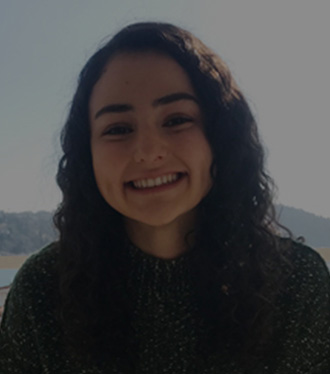
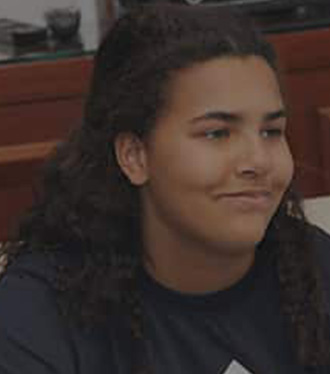
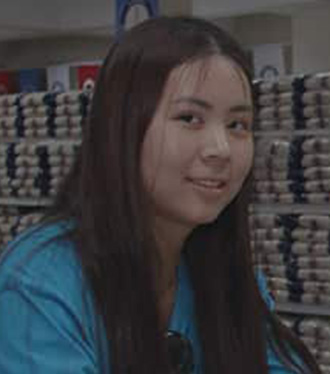
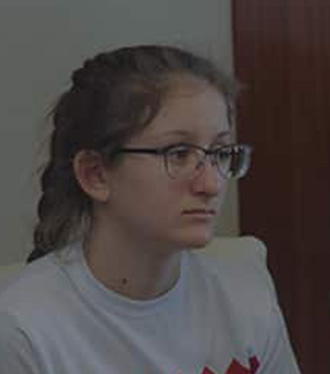
The story of Give A Hand began in March 2015, when Hülya Kösematoğlu and six of her classmates from The Hill School came together around a shared concern for children and families affected by the Syrian Civil War. As millions of people were displaced from their homes and many families began rebuilding their lives in Türkiye, the founders wanted to create a way for young people to contribute directly while also developing a deeper understanding of communities and experiences different from their own. From the very beginning, Give A Hand was designed not simply around the idea of providing assistance, but around bringing people together.
The first Give A Hand program was carried out in Gaziantep in 2015 with the support of Hasan Kalyoncu University. The program brought young volunteers together with Syrian refugee children and families through educational activities, workshops, games, conversations, and community experiences. What began with approximately ten volunteers quickly demonstrated that the impact of these interactions worked in both directions. Children received attention, encouragement, educational support, and new experiences, while volunteers returned home with a greater understanding of responsibility, empathy, cultural difference, and the realities faced by displaced families.
This reciprocal relationship became one of the principles that would continue to define Give A Hand. We have never believed that helping should be understood as a one-sided act. The person extending a hand and the person accepting it can both grow through the interaction. A child may gain confidence because someone has taken an interest in their education, while a mentor may develop patience and perspective through getting to know that child. A volunteer may arrive expecting to teach and discover how much they have to learn themselves. This exchange is at the heart of Give A Hand and remains as important today as it was when the first program began.
As interest grew among high school students who wanted to participate, Give A Hand began expanding. In 2016, programs reached Istanbul, and by the end of that year Give A Hand was implementing summer programs in both Istanbul and Gaziantep. These programs allowed young volunteers to spend meaningful time with children while participating in educational, social, and cultural activities. In 2017, the Istanbul program expanded further with the support of Istanbul Technical University. Each new program brought new students, volunteers, families, educators, and supporters into the Give A Hand community.
As Give A Hand grew, collaboration became an important part of its development. In 2018, Give A Hand began working with NEYAD, an organization with a long history of involvement in education and social impact in Türkiye. During the same period, Give A Hand collaborated with England-based Open Citadel, which helped produce social-impact films around the summer programs. These films helped communicate the experiences taking place in Türkiye to a broader audience and introduced Give A Hand to more young people internationally.
The programs were also intended to educate volunteers about the larger context surrounding the communities they were meeting. During the 2018 Istanbul program, participants had the opportunity to hear from Dr. Mehmet Güllüoğlu, then President of Türkiye’s Disaster and Emergency Management Presidency, AFAD. Conversations like these allowed volunteers to better understand the humanitarian context surrounding displacement and the scale of the response taking place in Türkiye. Give A Hand increasingly became not only a place where young people could volunteer, but also a place where they could learn about social responsibility, inequality, education, migration, and the importance of approaching unfamiliar communities with curiosity and respect.
Over time, however, an important question emerged. The summer programs created meaningful relationships, but what happened when the summer ended? A two-week experience could have an impact, but meaningful support often requires consistency. Children benefit from knowing that someone will return, remember what they discussed, ask how their exam went, notice their progress, and continue building a relationship over time. Give A Hand therefore began evolving from a model centered largely around short-term volunteer programs toward one built around long-term educational mentorship.
That evolution became one of the most significant chapters in Give A Hand’s story. The development of the online mentorship program made it possible for volunteers to remain consistently involved regardless of where they lived. Mentors could participate from Türkiye, the United States, Europe, or elsewhere while the students remained at the center of the program in Türkiye. Distance was no longer necessarily an obstacle to continuity.
Today, Give A Hand’s mentorship program connects volunteer mentors with children generally between the ages of 7 and 14 for regular one-on-one sessions throughout the academic year. Mentors and mentees meet online every Sunday from 18:00 to 19:00 Türkiye time, generally beginning in October and continuing until the middle of May. Each mentor is paired with a student, allowing the relationship to develop gradually rather than changing from week to week.
The sessions are educational, but they are intentionally broader than conventional tutoring. A mentor might spend one Sunday helping with mathematics and another practicing English conversation. Other sessions may involve reading, educational games, schoolwork, study skills, creative exercises, general knowledge, goal setting, or conversations about the student’s interests. What matters is that the mentor learns who their mentee is and adapts the experience accordingly.
A child who is initially hesitant to speak may slowly become more comfortable expressing an opinion. A student who says they dislike English may eventually begin looking forward to an English game with their mentor. A mentor might notice that their mentee loves science, drawing, football, animals, or storytelling and begin incorporating those interests into their sessions. These moments can appear small individually, but repeated week after week they become the foundation of a relationship.
This is why consistency has become one of the most important values within Give A Hand. Mentorship is not treated as occasional volunteering. Mentors make a commitment to their mentees and are expected to approach that commitment seriously. When a child expects to see someone every Sunday, showing up matters. Reliability itself can become part of what the mentor provides.
At the same time, Give A Hand understands that working with children carries responsibility. The program has therefore increasingly invested in preparing volunteers before they begin mentoring. New mentors participate in mentor education designed to introduce them to communication with children, appropriate boundaries, responsibilities, session organization, and the expectations of the program. Give A Hand also benefits from the involvement of educators and academic advisors, including Doç. Dr. Meri Taşçı Deveciyan of Istanbul Kültür University, whose educational perspective contributes to the development of the program and the preparation of mentors.
Mentor preparation is particularly important because Give A Hand does not expect volunteers to act as teachers, psychologists, or therapists. A mentor’s role is different. Mentors are intended to become consistent and encouraging older figures in their mentees’ lives: people who can support learning, listen, communicate respectfully, encourage curiosity, and celebrate progress while understanding the boundaries of their role.
As the mentorship program developed, Give A Hand also began creating more structured educational content for weekly sessions. Every mentor–mentee relationship is different, but mentors should not have to begin every Sunday wondering what to do. Educational activities, conversation prompts, games, exercises, creative projects, and age-appropriate materials can provide mentors with a starting point while still allowing them to personalize each session.
This content is increasingly being developed with attention not only to academic learning but also to communication, confidence, creativity, and self-expression. Give A Hand is also incorporating perspectives from individuals with backgrounds in psychology and education when appropriate, particularly when developing materials related to children’s communication and emotional development. This does not mean turning mentorship sessions into therapy. Instead, it means helping mentors communicate more thoughtfully, understand the importance of listening, create environments where children feel comfortable expressing themselves, and recognize when a situation should be brought to the attention of the program’s leadership rather than handled independently.
Give A Hand has also learned that supporting children means thinking beyond the weekly online classroom. While technology makes international mentorship possible, some of the most memorable learning experiences happen when children leave their usual environments and encounter something new. For this reason, in-person activities have become another important part of the program.
Through Give A Hand’s activities program, students can participate in educational, cultural, creative, and social experiences in Istanbul. These experiences can include excursions, museum and cultural visits, workshops, games, outdoor activities, group events, celebrations, and opportunities to explore parts of the city together. The purpose is not simply entertainment. New environments can encourage curiosity, confidence, independence, conversation, and friendship. A museum visit, a workshop, or a group activity may introduce a child to an interest they had never previously encountered.
The activities program also brings another dimension to the community created online. Children who normally meet their mentors through a screen can feel that they are part of something larger. They meet other Give A Hand students, interact with volunteers, participate in group experiences, and build memories associated with the program beyond their weekly sessions.
Give A Hand has continued developing systems to make sure that students remain included even when plans change. If a mentor becomes unexpectedly unavailable close to a session, the goal is not for the mentee to simply be forgotten for that week. Team members can organize alternative or group activities during the mentorship hour so that students can still participate. Although this may seem like a small operational detail, it represents something central to the way Give A Hand thinks about its work: decisions should be made with the child’s experience in mind.
Behind the weekly mentorship sessions is therefore a much larger organizational structure than what is visible on a Sunday evening. Coordinators help organize mentor–mentee pairings and Zoom rooms. Attendance and participation are followed throughout the year. Team members communicate with mentors and families. Educational content is prepared. Feedback is collected. Activities are planned. Social media communicates the program’s work to the wider community. Volunteers take responsibility for different parts of the organization so that the experience can remain consistent for the children involved.
Give A Hand also believes that feedback is essential to creating a sustainable program. Mentors and participants experience the program differently, and their observations help identify both strengths and problems. Periodic feedback gives the team an opportunity to understand what mentors need, what students respond to, where communication can improve, and what should change in future periods. The program has never been intended to remain exactly the same from year to year. Its history has been defined by evolution, and that willingness to adapt remains one of its strengths.
The role of young people themselves continues to be central to this evolution. Give A Hand was originally founded by students, expanded because students wanted to participate, and continues to depend heavily on young volunteers taking responsibility. High school and university students do not simply participate in the program; they can contribute to its operations, activities, content, communications, and leadership.
As Give A Hand enters schools and develops student communities, this creates another pathway for young people to become involved. School-based initiatives can introduce students to mentorship, volunteering, social responsibility, and leadership in a structured environment. Students can participate in activities with Give A Hand’s mentees, become mentors when appropriate, contribute ideas, organize projects, and eventually take on greater responsibility within the community.
This model reflects something Give A Hand has believed from the beginning: young people do not have to wait until adulthood to create meaningful social impact. With the right guidance and structure, they can take responsibility now.
Give A Hand also recognizes the commitment required from its volunteers. Participating every week throughout an academic year while balancing school, university, examinations, applications, internships, and personal responsibilities is meaningful work. Mentors who successfully complete their responsibilities can receive documentation recognizing their participation and contribution. These experiences can become part of university or professional applications, but the value of mentorship goes much further than a certificate. Volunteers gain practical experience in communication, responsibility, teamwork, leadership, problem solving, and interacting with people whose lives may be very different from their own.
Technology has also allowed the volunteer community to become increasingly international. A student who leaves Türkiye for university does not necessarily have to leave Give A Hand. A volunteer studying in another country can continue mentoring a student in Istanbul. Someone who discovers the program abroad can become part of a community based thousands of kilometers away. This allows Give A Hand to bring together volunteers with different educational, cultural, and personal experiences while keeping the children and families served by the program in Türkiye at the center of its work.
Over the years, Give A Hand has also supported students and families through initiatives beyond mentorship. The needs of a child cannot always be separated neatly into categories. Education, social experiences, encouragement, access to resources, and a sense of belonging can all affect one another. As a result, Give A Hand has continued looking for ways to respond thoughtfully to the communities it works with, whether through educational materials, activities, gifts and student recognition, mentorship, or practical support when appropriate.
Today, Give A Hand is therefore no longer defined by one single project. It is an interconnected community of programs and people. Weekly mentorship provides continuity. In-person activities create new experiences. Educational content gives mentors stronger resources. Mentor education helps volunteers understand their responsibilities. School communities introduce new generations of young people to service and leadership. Feedback allows the program to improve. Coordinators make sure that what is promised can actually happen each week. Families, educators, advisors, volunteers, and students each form part of the same ecosystem.
The organization has changed enormously since 2015. The original volunteers have grown up. New generations have joined. Programs have moved between cities and evolved from intensive summer experiences to relationships that continue throughout an academic year. Technology has changed how mentors and mentees meet. Educational resources have become more structured. New leadership roles have emerged. The understanding of what responsible mentorship requires has continued to develop.
Yet the idea behind Give A Hand has remained remarkably simple.
Sometimes people need a helping hand to move forward, and we believe that both the person extending that hand and the person accepting it can benefit from the interaction.
For Give A Hand, social impact is not about one group of people “saving” another. It is about creating opportunities for people who might otherwise never meet to know one another. It is about listening before assuming. It is about learning before judging. It is about showing up repeatedly rather than appearing once. It is about recognizing that a child’s confidence may grow because somebody consistently believes in them, while a volunteer’s understanding of responsibility may grow because a child is counting on them.
A successful mentorship session may look very ordinary from the outside. It may simply be two people on a Zoom call solving a mathematics problem, practicing English, reading a story, or laughing over an educational game. But the meaning of that interaction comes from repetition. The same mentor returns the following week. They remember what happened before. They ask about the test. They continue the unfinished activity. They notice progress. Gradually, trust develops.
The same principle applies to Give A Hand itself. The program was not built through one event, one partnership, one group of volunteers, or one year of work. It has been built through years of people choosing to continue what others started.
More than a decade after the first volunteers came together, Give A Hand continues to grow, but growth is not measured only by the number of mentors or students involved. Growth means creating stronger relationships. It means preparing volunteers more carefully. It means improving educational materials. It means listening to students and families. It means giving children new experiences outside their everyday environments. It means creating stronger systems so that commitments are kept. It means allowing young volunteers to become responsible leaders. And it means continuing to ask how the program can serve children more thoughtfully than it did the year before.
Behind every statistic is an individual child. Behind every volunteer hour is a relationship. Behind every Sunday session is a mentor choosing to show up. Behind every activity is the possibility that a student discovers a new interest, asks a new question, gains confidence, or simply has an experience they will remember.
Give A Hand began by bringing together those who wanted to help and those who could use a helping hand. More than a decade later, that remains at the center of everything we do.
Because sometimes a hand extended at the right moment can become much more than help.
It can become education. It can become encouragement. It can become opportunity. It can become friendship. It can become responsibility. It can become a relationship that changes the perspective of both people involved.
And sometimes, it can become the beginning of something that continues for years.